EN
EN  NL
NL 

“Help is liberating”
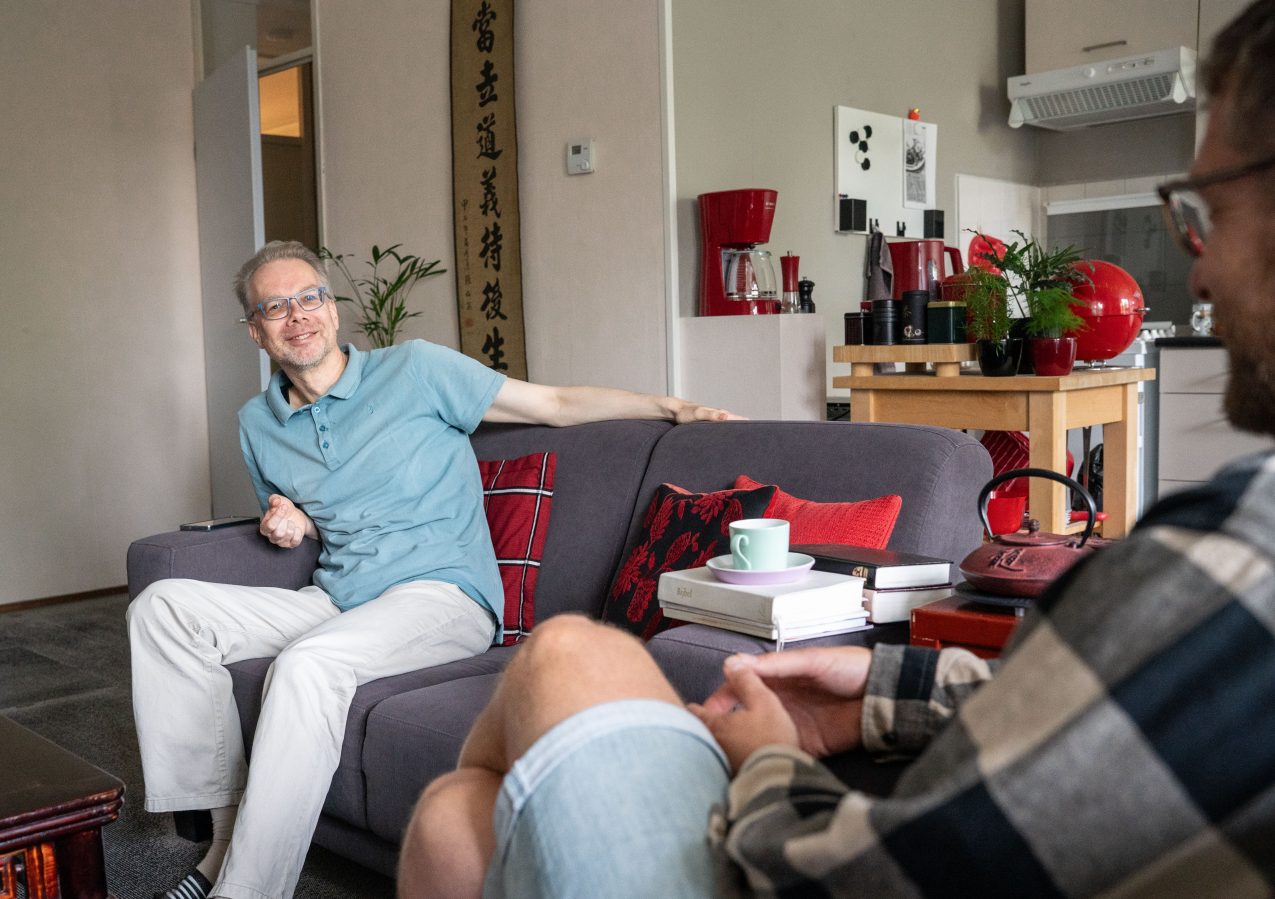
“I found it difficult to ask for help. You quickly start to think you’re a burden on society. But that’s not the case at all,” says Sietse. “It’s actually good that there are people who are there to help you figure things out.” Social worker Marcel from Amaryllis first got in touch with Sietse a year ago, when Sietse was keen to get back to work. He’d already hit a dead end several times in his job search. Thanks to Marcel’s support, Sietse has found peace of mind again and is back at work.
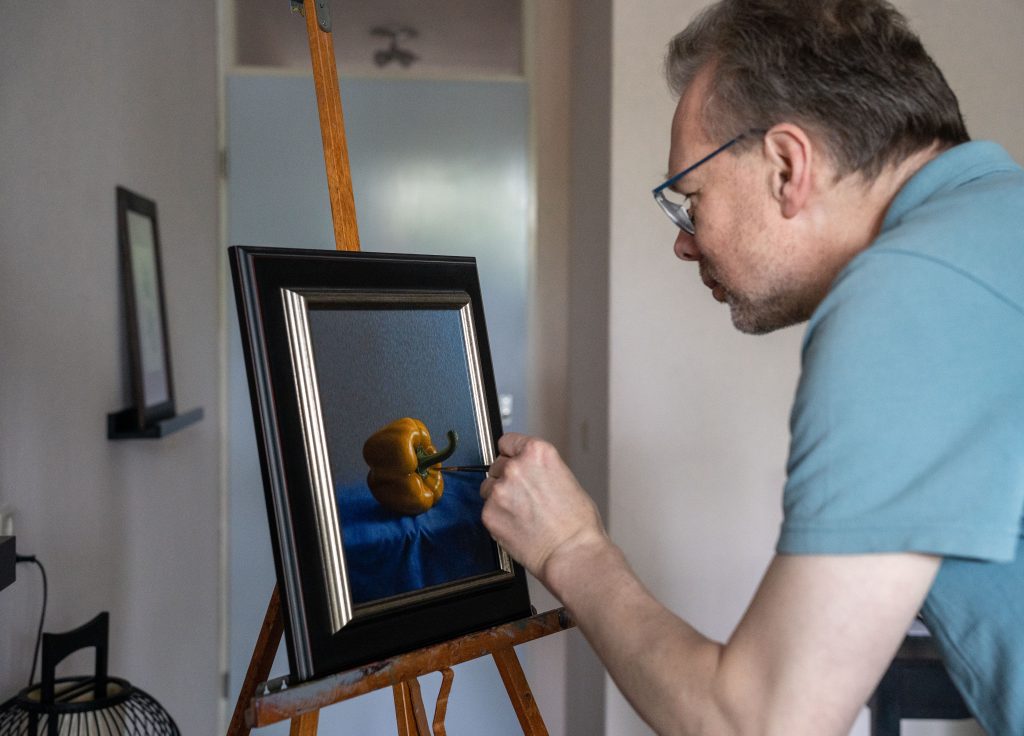
Sietse has always been an independent artist. He creates the most beautiful still lifes and used to sell them in various places. After the coronavirus pandemic, sales took a turn for the worse and he had to take on a part-time job to make ends meet. “I applied for jobs through companies and recruitment agencies, but I realised: I’ve been out of the labour market for too long. It’s not something I can just manage on my own anymore.”
Taking the step towards getting help
A few years earlier, Sietse had already been introduced to Amaryllis, when social workers from his neighbourhood came round to introduce themselves. That made an impression on him. When he needed help, he knew: that’s where I can go.
“Otherwise, you’ll just keep going round in circles on your own with your problem,” he says. “By talking to someone, you start to see your situation in a different light. And you realise that there are options after all.” He was put in touch with social worker Marcel. They discussed Sietse’s situation, his wishes and the options available to him.
Looking together at what *is* possible
At first, Sietse mainly felt pressure to find a ‘normal job’. “I thought: I’ve got to get a job, otherwise I won’t have enough money. I didn’t even care what sort of job it was.” But in his conversations with Marcel, that perspective changed. Marcel: “We looked at his strengths and what suits him. Painting is his passion. You could say, ”Go and do something else’, but the question is whether that would work in the long run.”
Together, they looked for a solution that *was* sustainable. Sietse went on temporary benefits, which gave him some peace of mind and security. From there, he was able to work on his future.
Space to rebuild
That space turned out to be important. Sietse was able to focus on his passion once again: painting. He is now fully immersed in it once more. “I’m painting full-time again,” he says. “I also sell my work through galleries and am trying out new things. For example, painting outdoors, on location. That gives me energy.” He’s also following a course in part-time entrepreneurship, so that he can further develop his work and reach more people.
New insights
During the programme, Sietse also used an online programme in which he completed assignments and learnt to reflect on himself. “I’m someone who thinks a lot. So it’s nice to be given the time to really think things through,” he says. “You get to know yourself better and see things from a different perspective.” According to Marcel, that was exactly what Sietse needed: “Above all, he took the steps himself. I just walked alongside him for a bit. That’s the beauty of this work.”
It doesn’t have to be just that
Perhaps the most important thing Sietse has learnt is that you don’t have to do it all on your own. His message to other residents is clear: “If you can’t sort things out yourself, seek help. You don’t have to solve everything on your own. It takes the pressure off and helps you move forward. And at Amaryllis, they’re right there by your side.”