EN
EN  NL
NL 

Bringing healthcare and social care closer together
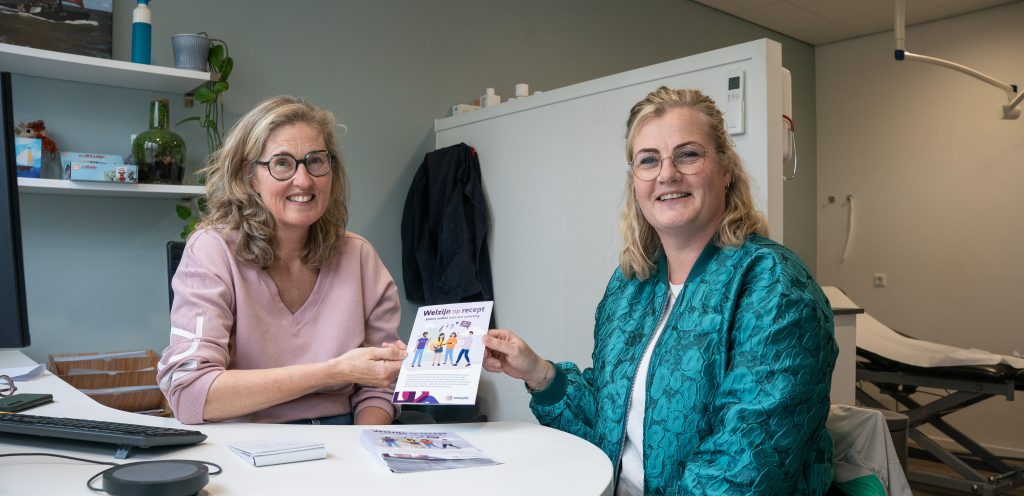
General practitioner Merijn from Wijtgaard sees many patients in her practice with symptoms that have no clear medical cause. “A large proportion of these symptoms are linked to a person’s outlook on life. Loneliness, stress, financial worries, parenting issues or lifestyle problems often manifest themselves physically. In such cases, medication isn’t always the solution.” For these people, Amaryllis is the right place to go. That is why GP practices and Amaryllis are now working together on the ‘Wellbeing on Prescription’ project.
In the Healthy and Active Living Agreement (GALA) and the Integrated Care Agreement (IZA), we have agreed to focus on preventive care and collaboration between the medical and social sectors. Through ‘Wellbeing on Prescription’, we are linking these sectors together. ‘Wellbeing on Prescription’ is currently a two-year pilot scheme. We receive funding for this from Leeuwarden City Council. The project will be evaluated after this period. One of the participating practices is It Kleaster in Wijtgaard, where Merijn works as a GP.
“As I come from the social care sector myself, I know just how much is possible there,” explains Merijn. “With Wellbeing on Prescription, I can refer people to someone who has the time and attention to help them.” According to Merijn, this is a factor for at least half of her patients. Not always as a direct cause, but often as an opportunity to improve the situation.
From referral to collaboration
Under the ‘Wellbeing on Prescription’ scheme, one social worker from an Amaryllis neighbourhood or village social team is attached to a GP practice. This social worker acts as a wellbeing coach. Each practice determines how best to fulfil this role.
Wellbeing coach Femke: “I pop in here every month. That way, we can discuss any queries in an accessible way. We have direct telephone numbers and email contacts. That applies to the GPs, but also to the practice assistants.” According to her, those short lines of communication make all the difference. “You can get in touch with each other quickly, and that ensures that questions are actually dealt with.”
Before “Wellbeing on Prescription” existed, Merijn would sometimes make referrals too, but it felt different. “If you don’t have a designated point of contact and don’t receive any feedback, a referral can quickly disappear into a black hole. Whereas with a medical referral, for example to a doctor, I always hear what the outcome is.” With ‘Wellbeing on Prescription’, that happens too. “You have a face to the name – someone who’s regularly at the practice, with whom you can consult. That makes collaboration much easier and more effective.”
People feel that their voices are being heard
For Merijn, “Wellbeing on Prescription‘ is very rewarding. ’It’s really satisfying to be able to refer people – the ones you find yourself thinking, ”What now?’ – with complete peace of mind. And you really do see results. Some people perk up, feel that they’re being listened to, and come to the surgery less often.”
Femke sees the effect it has on people. “It often involves people who feel lonely, who want to belong somewhere or who feel stuck. If you can help them get involved in an activity, for example, they start to feel that they matter again. Ultimately, that also takes some of the pressure off the GP’s surgery.”
Tips for GPs
Merijn has a clear piece of advice for colleagues: “See if you can be assigned a dedicated point of contact at your local welfare organisation. This not only improves the quality of care for the patient, but also makes your own work more enjoyable. It’s nice to be able to have a quick chat with someone who thinks along with you and gives you feedback. That way, you can also be sure that the patient is being looked after properly and that their enquiry is actually being dealt with.”
According to Merijn, identifying suitable patients starts with really listening. “If people keep coming back with symptoms for which you can’t find a clear medical explanation, then you know there’s more to it than that. That’s when it’s important to talk to them about their wellbeing.”